Paper No.14 .ppt :- The African Literature
To evaluate my presentation click here
A Grain of Wheat as a national epic of Anti-colonial struggle
Quality by John Galsworthy
Quality by John Galsworthy
 |
In the present story
'Quality' he depicts a German craftmen effords to survivein an era,
where success is determined by advertisement and not by work. This is a
kind of master piece by Galsworthy. The story highlights the conflict of
Gassler brothes, who are excellent shoe maker but can not face the
globle and glamorous advertisement. The narretor pleased orders many
time for shoes to Mr Gassler's shop. But at the end of the story he
comes to know that Mr. Gassler passed away because of slow starvation.
He dedicated his entire life to making boots and even such a hard work
can not survive him. The end of the story creat a simpathy for the pure
Gassler and also makes us things about the changing world. 'Quality'
itself suggest as a short and simple title. It is a very relavent title
to excellent craftman, Mr.Gassler who never compromise with Quality.
'Quality' is an approach story that
represents the real picture of the changing mindset of people. Customers
are established by advertising and marketing by the customer and boats.
TheTiger Smiled by Jim Corbett
- The Tiger Smiled by Jim Corbett
Tiger laugh is the story of hunter Jim Corbett. He was a hunter and naturalist who killed many tigers and leopards and saved many villages. This story is his experience of killing a man eating tiger.
The story begins with Jim Corbett and two other colleagues behind the tiger in Ravine. He found a nude bird wreath There were two eggs. It takes the eggs because the night's eggs are missing in its collection.
They go further in Ravine. His colleague told him he heard tiger breeding? Jim denies, but suspects that the tiger is behind them. Immediately they faced face-to-face. Jim thinks he should act immediately or she should slowly move his steps that the tiger is not worried. It shows wifle towards the tiger with difficulty. He pressed the trigger. The bullet hurt his spinal cord and broke his upper part of his heart.Tigers are killed. They recognize the species of tigers. It was a chaotic tiger that killed fourteen people.
They climb up the cliffs and get out of the valley. Jim at the party decided to put the egg in the nest again. He kept this in his left hand. This story describes the mother of the eggs in the nest.
The Trunk of Ganesha by Jayant Mahapatra
The Trunk of Ganesha by Jayant Mahapatra

The story of “The Trunk of Ganesha” is mostly offers a
reader the difference between superstition and logical reality. Indians have
blind beliefs as far as religion is concerned and Jayanta Mahapatra has tried
to convince the reader that all the time it’s not all about God and Goddess and
anger of them, but logic also exits. Mahapatra has beautifully presented the
element of superstitious which offers an idea to take facts as practically
first rather than religiously.The
Trunk of Ganesha” is a short story of an idol maker of village. There is a good
description of Indian society and how Indians used to react upon such matters.
The protagonist of the story is Gobina who is very famous for his skill of
making idols and making them in such beautiful and different way. He has
achieved his occupation and skills from his ancestors. Gobinda’s wife also has
proud on him but he has a problem with his two sons who are not interested in
the occupation of ancestors but he is much satisfied with his youngest son
Ranju. He is happy with his circumstances, but it did not last long when he one
day saw the statue of Ganesha which he was very close to complete.
Gobinda
has this skills for his ancestors but he himself has changed the way of making
idols of God and Goddess, the changes were in the designing of clay figures and
the appearance of the idols, he make them more “eye catchy”. Gobinda has been
done this because of the demand of his customers who wanted their god more in
tune with the time, and because of that reason he has given slim and sinuous
bodies to Goddess.The
first reason he thought about the broken trunk that changes he made in the
idols of God and God has became angry, but the fact was that he has not made
any change in the idol of Ganesha though he was feeling guilty.
so he decided to observe
that what happens in workroom actually. He and his youngest son Ranju decided
to stay in workroom at night. Both have taken position in dark corner of room,
and what they have witnessed was very surprising. After waiting for some time
they have saw that one cat has came from window and jumped upon the trunk of
Ganesha and it has broken again and the mystery has solved.
The Postmaster by Ravindranath Tagore
The Postmaster by Ravindranath Tagore
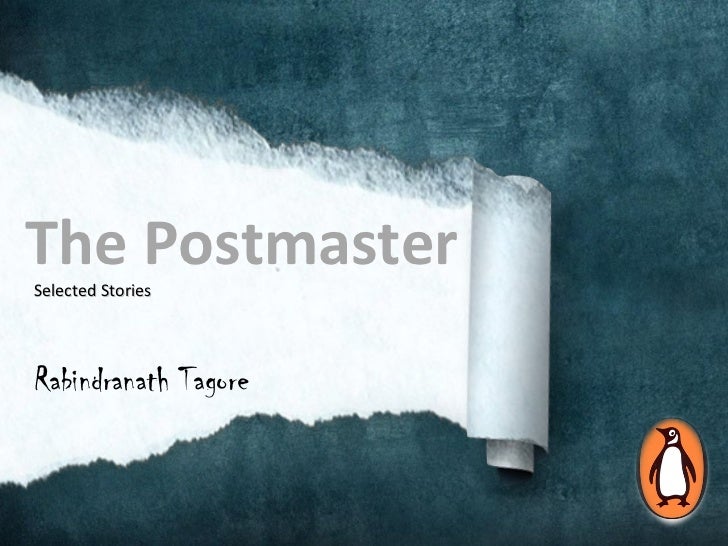
In The Postmaster by Rabindranath Tagore we have the theme of
loneliness, happiness, gratitude, connection, memories and guilt. Taken
from his Collected Stories collection the story is narrated in the first
person by an unnamed narrator and after reading the story the reader
realises that Tagore may be exploring the theme of loneliness. The
postmaster finds it unbearably lonely living in the village. He has very
little work to do and his mind wanders to the idea that perhaps he
should find himself a wife. Despite Ratan being an ideal choice for the
postmaster.
However despite this the postmaster still does not imagine himself
marrying Ratan. It is as though he considers her to be a class beneath
him and not fit to be his wife. However the reader is also aware that
the postmaster does not have many women coming to visit his home who
might be prepared to do the same work as Ratan.
If anything Ratan shows the postmaster
the dedication that a wife would show a husband yet the postmaster is
too blind to see this. He is more occupied with his dissatisfaction of
having to work so far away from the city.
It might also be important that the
postmaster is able to speak freely when he is speaking to Ratan. He does
not feel emotionally embarrassed when he is talking about his family.
Something that he would feel should he speak to the men in the factory
about his family. Tagore may be highlighting the differences in
conversation between men and women and those between men talking to men.
The postmaster is at ease when he discusses his family with Ratan. It
is as though she understands the postmaster. Ratan too has memories of
her family which she readily shares with the postmaster.
The end of the story is also interesting as Tagore appears to be
exploring the theme of guilt. While on the boat the postmaster thinks
about Ratan and thinks about going back to the village to get her.
However his thoughts are based more on guilt than on helping Ratan in
any way. Something that is noticeable when the sails pick up the wind
and the postmaster soon forgets about Ratan. Ratan on the other hand
cannot forget about the postmaster. It is as though she has not only
lost a friend but she has lost someone she has fallen in love with.
Tagore highlighting that it will take some time for Ratan’s wounds to
heal and for her to forget about the postmaster. However she will forget
about the postmaster and she will grow attached to somebody else.
Somebody who might also abandon her. Leaving Ratan to make the same
mistakes over and over again. All because she wants to feel connected
and loved by another human being. A very normal instinct for anybody to
have. However life sometimes does not work out as simply as we would
like it to. Though the postmaster might have seen the complications of
starting a relationship with Ratan.
Ode on solitude by Alexander Pope
Ode on solitude by Alexander Pope
Ode on Solitude" is a poem by Alexander Pope, written when he was twelve years old, and widely included in anthologies. The title of this poem was also used by other poets, such as Joseph Warton.
Ode on Solitude" is a poem by Alexander Pope, written when he was twelve years old, and widely included in anthologies. The title of this poem was also used by other poets, such as Joseph Warton.

The intent on solitude by Alexander Pope is a poem that how to be alone can be very good.Poetry says that a happy person is one who can lead a happier life with few things. They are happy, whose desires can be accomplished by a few paternal acre and who can breathe the original air on their land.Happy man is the one who has heard of milk filled with corn, fields, clothes wear, trees give shade in the summer and brings a fire in the winter. Who can spend time without worrying and who has health and peace of mind. Who can sleep and read by night? This is real happiness.So the last poet wants to remain invisible and unknown. He wants that no one will mourn his death.
Therefore, this poem gives the characteristics of a real happy man. The message is that who is rich is not happy but a happy person who has peace.
Prayer for My Daughter by W.B Yeats
Prayer for My Daughter by W.B Yeats
A Prayer for my Daughter" is a poem by William Butler Yeats written in 1919 and published in 1921 as part of Yeats' collection Michael Robartes and the Dancer. It is written to Anne, his daughter with Georgie Hyde Lees, whom Yeats married after his last marriage proposal to Maud Gone was rejected in 1916.

A Prayer for my Daughter" is a poem by William Butler Yeats written in 1919 and published in 1921 as part of Yeats' collection Michael Robartes and the Dancer. It is written to Anne, his daughter with Georgie Hyde Lees, whom Yeats married after his last marriage proposal to Maud Gone was rejected in 1916.
William Butler Yeats, my daughter's prayers, sleeps in a cradle with a newborn baby's image. A storm is provoked by an outburst of anger and so she worries about worrying about her child being saved from the next difficult time. They are sad and concerned about the future of their daughter.
He says, "As I'm walking and praying for my little daughter, I am convincing in the state of enthusiasm and enthusiasm" that future years have already come and it seems to be dancing on the side of the drum who weighs tediously . These future years are seen by Yates's imagination arising out of innocent innocents of the sea. In other words, the sea looks innocent but it is able to give birth to boring storms that are capable of destroying something.
Yates wants his daughter to have some qualities, so that she can face the future. Yeats says she makes her beautiful, but she is not so much as she feels proud and deluded by others. Those who are capable of glorifying their beauty believe in beauty. The result is that pride leads to their false natural pity. Choosing the right choices in life is a very important thing, but those who are over-beauty can not be able to do this and can never find a good friend in the true sense of the world. The great thing about poetry is that it has a specific and common utility. At the same time, poetry gives indirect references to Maud Go, whom Yeats loves very much and still can not win his hand.
The poet sees within himself and finds that there is hate inside. She thinks hatred kills innocence and desires that her daughter should not be hated. Maud Gone was married to a foolish person, because of this unhealthy attitude of the mind. The poet expressed the desire that his daughter should not create foolish intelligence; She thinks that if she is free from hatred and intellectual rituals, her daughter can remain innocent. Innocent suicide, self-reliant and self-confident. The poet's last wish is that his son should marry the family of the family who takes him home where the tradition and ceremony fills the atmosphere.
After all, the poem is a prayer for grace and grace in cruel civilization. Behind the prayer, Yeats' Maud Gone is a bitter memory of Gone, who, for the sake of politics, intellectual hatred and pride, can distort beauty and grace, for the tragedy.
Friendship by Henery David

Friendships' poem written by Henry David Thoreau This is a common title 'friendship' which is found in other literary works such as essays, poems and short stories. But Thoreau Friendship' is proud to be truly unique. Poetry 'friendship' focuses on the biggest relationship.H. D Thoreau analyzed the roots of his roots and discovered that there is no difference between love and friendship, both are equally important in relation. Love is the greatest force on earth, and it is the basis of every relationship. No filling for love in life is not pure. The person with the love is always in the majority. Love can be seen in many relationships, such as husband and wife, parents and children, brother and sister, but love is incomplete without friendship. There should be an element of friendship in any relationship to create a successful relationship.
Friendship is a gift, you give yourself A true friend is a blessing of God. Friends are the most important and crucial part of our lives. A person or someone related to you who is a friend is a person with whom you feel comfortable. You can easily share joy and sadness with your friends. They are your spinal cord, you need them in every part of life.
This poem connects both elements and comments that they are related to each other. Friendship will always be successful in place of love, but friendships lose its charm when friendships are based on selfishness. The end of friendship is the end of love.
'Friendship' poetry also establishes not only the dignity of friendship but also the relationship with love. H. Di Thoreau is a thinker, so his poems express more thoughts than emotions.
Daffodils by Wordsworth
Daffodils by Wordsworth

In this poem, Wordsworth remembers his experience of how he wandered one day, he saw a group of Daffodils flowers and was very happy. We know it was a nature poet. Therefore, this beauty of nature fills the heart of the poet with delight.
The speaker says that he wandered alone like a cloud. Suddenly, near the lake, he saw a large group of yellow daffodils wrapped in the breeze. It was a milk way that never ends. Poetry says that I saw ten thousand daffodils at the same time. And all these flowers were dancing. Speaker's loneliness was changed joyfully, but he did not even understand what he received.
Now, the poet is at home, sitting on the coach. She visualizes the scene in free time, and the sight of Daffodils happily fills the heart of the poet and starts dancing with the Daffodils.
The boy Comes home by A.A. Milne
The boy Comes home by A.A. Milne

The one act
play “The Boy Comes Home” is written by Alan Alexander Milne (1882-1956)mostly
known as A.A.Milne.
The play
“Boy comes Home” is based on the theme of the generation gap.
The old
generation thinks that young generation is immature, just like a kid. It should
obey the old generation. In fact , the young generation is mature enough to
take their decisions right. There is continuous conflict between uncle James
and Philip. Uncle James is the representative of old generation to show
authority and tradition. And Philip is the symbol of youth. So, this generation
gap can obviously create conflict somehow in direct or indirect way.
It is a light comedy and its job is to
provide delight to audience but it also giving moral massage that those who
tries to threatens other are themselves is defeated by some other force and old
generation should not impose their desires on younger , they should make them
independent to take their desires on
their own. Here dream sequence played a very vital role.
The Boy Comes Home
Short Summary: It is a room in Mr. James house where Philip is sitting
for breakfast after the usual hour as determined by Mr. James. Nobody
can have breakfast aft 8:00. But Philip has just returned from war and
wants his breakfast after that hour. He asks Marry, the servant, to get
him something to eat. She is very afraid of the cook, Mrs. Higgins. But
Philips orders her to go and get the breakfast. Aunt Emily enters and
seems very caring about Philip. She asks about his stay in the trenches.
Then we come to know that Philip does not like much of his uncle James
because his strict rules and regulations.
There comes Marry telling the aunt that Mrs. Higgins wants to talk to
her. Philip asks her to come to the room. Mrs. Higgins comes and says:
"Breakfast is at eight o'clock. It always has been as long as I've been
in this house, and always will be until I get further orders."
Read more at: https://www.risenotes.com/boy/The-Boy-Comes-Home-short-summary.php
Copyright © RiseNotes.com
Read more at: https://www.risenotes.com/boy/The-Boy-Comes-Home-short-summary.php
Copyright © RiseNotes.com
Uncle James begins to wait for his Philip and perhaps he falls asleep
and dreams that Philip has come to meet him. Here Philip is very rude
with his uncle. He demands his money before attaining the age of
majority. But the uncle refuses to give him the money. Rather he asks
his nephew to join him in his jam business. But Philip gets so rough
with his uncle that he gets a bomb in his hand threatening his uncle.
Philip says that "we use force to put down force". The uncle gets so
terrified before Philip that he surrenders and agrees to do whatsoever
Philips wants him to do. Philip goes out and then we see James waking up
as if from a dream. He sees about and realizes that it was a dream
because he was still in his chair with the newspaper he was reading. After a few moments, Philips enters the room smiling as if nothing has
happened at all. Uncle James is much terrified from within but he hides
his fear of Philip and offers him to work with him in his office and
James readily agrees as suggested by his uncle. Philip does not demand
anything as Uncle James has dreamt of probably. Uncle James does ask him
if he wants to be an architect, as per the dream it was Philip's
desire, but Philip looks strangely at his uncle.
But the closing sentence of Philip makes the reader think if it was really a dream with Uncle James or some sort of trick played upon him by Philip about the manager at the business: "Perhaps I'd better bring my revolver, in case he isn't". After Philip is gone, Uncle James looks back into the room thinking if it was a dream or reality. It remains in the dark.
But the closing sentence of Philip makes the reader think if it was really a dream with Uncle James or some sort of trick played upon him by Philip about the manager at the business: "Perhaps I'd better bring my revolver, in case he isn't". After Philip is gone, Uncle James looks back into the room thinking if it was a dream or reality. It remains in the dark.
The Boy Comes Home
Short Summary: It is a room in Mr. James house where Philip is sitting
for breakfast after the usual hour as determined by Mr. James. Nobody
can have breakfast aft 8:00. But Philip has just returned from war and
wants his breakfast after that hour. He asks Marry, the servant, to get
him something to eat. She is very afraid of the cook, Mrs. Higgins. But
Philips orders her to go and get the breakfast. Aunt Emily enters and
seems very caring about Philip. She asks about his stay in the trenches.
Then we come to know that Philip does not like much of his uncle James
because his strict rules and regulations.
There comes Marry telling the aunt that Mrs. Higgins wants to talk to
her. Philip asks her to come to the room. Mrs. Higgins comes and says:
"Breakfast is at eight o'clock. It always has been as long as I've been
in this house, and always will be until I get further orders."
Read more at: https://www.risenotes.com/boy/The-Boy-Comes-Home-short-summary.php
Copyright © RiseNotes.com
Read more at: https://www.risenotes.com/boy/The-Boy-Comes-Home-short-summary.php
Copyright © RiseNotes.com
Uncle James begins to
wait for his Philip and perhaps he falls asleep and dreams that Philip
has come to meet him. Here Philip is very rude with his uncle. He
demands his money before attaining the age of majority. But the uncle
refuses to give him the money. Rather he asks his nephew to join him in
his jam business. But Philip gets so rough with his uncle that he gets a
bomb in his hand threatening his uncle. Philip says that "we use force
to put down force". The uncle gets so terrified before Philip that he
surrenders and agrees to do whatsoever Philips wants him to do. Philip
goes out and then we see James waking up as if from a dream. He sees
about and realizes that it was a dream because he was still in his chair
with the newspaper he was reading.
After a few moments, Philips enters the room smiling as if nothing has
happened at all. Uncle James is much terrified from within but he hides
his fear of Philip and offers him to work with him in his office and
James readily agrees as suggested by his uncle. Philip does not demand
anything as Uncle James has dreamt of probably. Uncle James does ask him
if he wants to be an architect, as per the dream it was Philip's
desire, but Philip looks strangely at his uncle.
But the closing sentence of Philip makes the reader think if it was
really a dream with Uncle James or some sort of trick played upon him by
Philip about the manager at the business: "Perhaps I'd better bring my
revolver, in case he isn't". After Philip is gone, Uncle James looks
back into the room thinking if it was a dream or reality. It remains in
the dark.
Read more at: https://www.risenotes.com/boy/The-Boy-Comes-Home-short-summary.php
Copyright © RiseNotes.com
Read more at: https://www.risenotes.com/boy/The-Boy-Comes-Home-short-summary.php
Copyright © RiseNotes.com
The Boy Comes Home
Short Summary: It is a room in Mr. James house where Philip is sitting
for breakfast after the usual hour as determined by Mr. James. Nobody
can have breakfast aft 8:00. But Philip has just returned from war and
wants his breakfast after that hour. He asks Marry, the servant, to get
him something to eat. She is very afraid of the cook, Mrs. Higgins. But
Philips orders her to go and get the breakfast. Aunt Emily enters and
seems very caring about Philip. She asks about his stay in the trenches.
Then we come to know that Philip does not like much of his uncle James
because his strict rules and regulations.
There comes Marry telling the aunt that Mrs. Higgins wants to talk to
her. Philip asks her to come to the room. Mrs. Higgins comes and says:
"Breakfast is at eight o'clock. It always has been as long as I've been
in this house, and always will be until I get further orders."
Read more at: https://www.risenotes.com/boy/The-Boy-Comes-Home-short-summary.php
Copyright © RiseNotes.com
Read more at: https://www.risenotes.com/boy/The-Boy-Comes-Home-short-summary.php
Copyright © RiseNotes.com
Uncle James begins to
wait for his Philip and perhaps he falls asleep and dreams that Philip
has come to meet him. Here Philip is very rude with his uncle. He
demands his money before attaining the age of majority. But the uncle
refuses to give him the money. Rather he asks his nephew to join him in
his jam business. But Philip gets so rough with his uncle that he gets a
bomb in his hand threatening his uncle. Philip says that "we use force
to put down force". The uncle gets so terrified before Philip that he
surrenders and agrees to do whatsoever Philips wants him to do. Philip
goes out and then we see James waking up as if from a dream. He sees
about and realizes that it was a dream because he was still in his chair
with the newspaper he was reading.
After a few moments, Philips enters the room smiling as if nothing has
happened at all. Uncle James is much terrified from within but he hides
his fear of Philip and offers him to work with him in his office and
James readily agrees as suggested by his uncle. Philip does not demand
anything as Uncle James has dreamt of probably. Uncle James does ask him
if he wants to be an architect, as per the dream it was Philip's
desire, but Philip looks strangely at his uncle.
But the closing sentence of Philip makes the reader think if it was
really a dream with Uncle James or some sort of trick played upon him by
Philip about the manager at the business: "Perhaps I'd better bring my
revolver, in case he isn't". After Philip is gone, Uncle James looks
back into the room thinking if it was a dream or reality. It remains in
the dark.
Read more at: https://www.risenotes.com/boy/The-Boy-Comes-Home-short-summary.php
Copyright © RiseNotes.com
Read more at: https://www.risenotes.com/boy/The-Boy-Comes-Home-short-summary.php
Copyright © RiseNotes.com
The Boy Comes Home
Short Summary: It is a room in Mr. James house where Philip is sitting
for breakfast after the usual hour as determined by Mr. James. Nobody
can have breakfast aft 8:00. But Philip has just returned from war and
wants his breakfast after that hour. He asks Marry, the servant, to get
him something to eat. She is very afraid of the cook, Mrs. Higgins. But
Philips orders her to go and get the breakfast. Aunt Emily enters and
seems very caring about Philip. She asks about his stay in the trenches.
Then we come to know that Philip does not like much of his uncle James
because his strict rules and regulations.
There comes Marry telling the aunt that Mrs. Higgins wants to talk to
her. Philip asks her to come to the room. Mrs. Higgins comes and says:
"Breakfast is at eight o'clock. It always has been as long as I've been
in this house, and always will be until I get further orders."
Read more at: https://www.risenotes.com/boy/The-Boy-Comes-Home-short-summary.php
Copyright © RiseNotes.com
Read more at: https://www.risenotes.com/boy/The-Boy-Comes-Home-short-summary.php
Copyright © RiseNotes.com
To his coy mistress by Andrew Marvell
 |
To his coy mistress is a love poem by Andrew Marvell.
In the first stanza, the speaker tells his beloved that he is very kind to her, she declares that if she is in the world she will worship her body. Lovers think how they can spend their love day Lover says that a hundred years will just praise the eyes of his beloved and two hundred years of praising each and every mother of her.
In the second Stanza, the voice of poetry has changed, and the speaker says that he does not always have time in the world and he dies to the virgin. He can hear chariots coming near. Poetry says that beauty will not stay after time, her love songs will no longer remain, she will turn into ashes of her lust. The tomb is a personal place and there they can not love. Poetry says that it is time to love.
In the third and final stanza, the speaker effectively conveys their arguments that they will not be permanently small and should take advantage of them when they can. It's a young day and they should love.
The Bluest Eye by Toni Morrison
The Bluest Eye, published in 1970, is the first novel written by author Toni Morrison. Morrison is an acclaimed African American novelist, Pulitzer, and Nobel Prize winner whose works are praised for addressing the harsh consequences of racism in the US.
The novel, which takes place in Lorain, Ohio, tells the life of a young African-American girl named Pecola who grows up during the years following the Great Depression. Set in 1941, the story reveals that due to her mannerisms and dark skin, she is consistently regarded as "ugly". As a result, she develops an inferiority complex, which fuels her desire for the blue eyes she equates with "whiteness". The point of view of the novel switches between various perspectives of Claudia MacTeer, the daughter of Pecola's foster parents, at different stages in her life. In addition, there is an omniscient third-person narrative which includes inset narratives in the first person.

The Bluest Eye' has a strong plot construction. The whole story is told through the character of Claudia, She represents as a child and an adult as well as the third person. There are total 11 chapters in the novel connected logically. 'The Bluest Eye' is a rich in symbolism. Morrison has made use of many symbols like 'Home' that symbolizes the contrast life of two black or Negro girls. While the title 'The Bluest Eye' itself is a symbolic one that suggests Pecola's strong desire of blue eyes. It stands for beauty as well as sadness. Another impotant symbols 'Marygold' it symbolises the well fare life of Claudia and Frieda as well as it symbolises the deathe of Pacola's baby.
Dr Jekyll And Mr Hyde by R.L.Stevenson

Dr. Henry Jekyll thinks that he is fighting between good and bad in himself, so in turn, the ego leads to conflict with Edward Hyde. She tries to suppress evil practices that are not suitable for adultery in her life. He created a serum in an effort to cover this hidden evil. However, by doing so, Jekyll Heidi is converted into a mysterious animal without mercy or repentance. Jekyll has a friendly personality, but as a Hyde, it becomes mysterious and violent. As time passes, Hyde power grows in power and when Jekyll shows signs of physical or moral weakness, it is finally shown, now the need to leave the siram.
Stevenson never says what he's doing on the night of his night, usually saying that he is an evil and sensual nature. Thus, in the context of time, it is disgusting with Victorian religious moral. Activities like Vedas, prostitutes or activities related to theft are being shaken. However, it is Hyde violent activities that give him the most thrill, leads him to attack and kill Sir Denners Carve, for obvious reasons, making him a victim of hunting throughout England.Eventually, Jekyll was preparing potion from the quantity of ingredients, and from the new stocks Dr. Successive batches made by Jekyll failed to produce change. Jekyll speculated that the original ingredient making original potion dosage should be contaminated by itself. After buying a donut after a chemist was sent to the priest, he would not work, he went to a lesser extent to find, he believed that the latter supply lacked the necessary ingredients, which made potion successful for his experiments. Their ability to return to Jekyll from Hyde gradually disappeared as a result. Jacqueline wrote that although he wrote a letter, he knew that he would soon become a Hyde, using the last of the salt and wondering if he would to face execution for his crimes or chose to kill himself. Jekyll noted that, in any case, his life ended at the end of his letter. He wrote a letter and said, "I am annihilating the life of the unhappy Henry Jekyll." With these words, both the document and the novel come nearer.The original pronunciation of Jekyll was "Jacques", which was originally used in Stevenson's original Scotland. This is also the pronunciation of Gertrude Jekyll.
Stevenson never says what he's doing on the night of his night, usually saying that he is an evil and sensual nature. Thus, in the context of time, it is disgusting with Victorian religious moral. Activities like Vedas, prostitutes or activities related to theft are being shaken. However, it is Hyde violent activities that give him the most thrill, leads him to attack and kill Sir Denners Carve, for obvious reasons, making him a victim of hunting throughout England.Eventually, Jekyll was preparing potion from the quantity of ingredients, and from the new stocks Dr. Successive batches made by Jekyll failed to produce change. Jekyll speculated that the original ingredient making original potion dosage should be contaminated by itself. After buying a donut after a chemist was sent to the priest, he would not work, he went to a lesser extent to find, he believed that the latter supply lacked the necessary ingredients, which made potion successful for his experiments. Their ability to return to Jekyll from Hyde gradually disappeared as a result. Jacqueline wrote that although he wrote a letter, he knew that he would soon become a Hyde, using the last of the salt and wondering if he would to face execution for his crimes or chose to kill himself. Jekyll noted that, in any case, his life ended at the end of his letter. He wrote a letter and said, "I am annihilating the life of the unhappy Henry Jekyll." With these words, both the document and the novel come nearer.The original pronunciation of Jekyll was "Jacques", which was originally used in Stevenson's original Scotland. This is also the pronunciation of Gertrude Jekyll.
Heart of darkness by Joseph Conrad
Heart of Darkness (1899) is a novella by Polish-English novelist Joseph Conrad about a narrated voyage up the Congo River into the Congo Free State in the so-called heart of Africa.[1] Charles Marlow, the narrator, tells his story to friends aboard a boat anchored on the River Thames. This setting provides the frame for Marlow's story of his obsession with the ivory trader Kurtz, which enables Conrad to create a parallel between what Conrad calls "the greatest town on earth", London, and Africa as places of darkness.[2]

Heart of Darkness is centered around Marlowe, an introspective navigator, and its travel-oriented centers to meet Kurtz, who is known as the idealistic person of great capacity. Marlowe worked as the company's captain of the river banks, a Belgian concern was held to trade in Congo. When he travels to Africa and then reaches to Congo, Marlowe faces widespread inefficiency and cruelty in the company's stations. Native inhabitants of the region have been forced to serve the company, and they suffer from excessive work and ill treatment in the hands of the company's agents. The royal enterprise's cruelty and square are surrounded by suspicious and elegant forests which are surrounded by white man's colonies, making them small islands between a huge darkness.Marlon comes at the Central Station, run by a general manager, an immoral, conspiracy character. He finds that his vapor has been smoked, and in some months the parts are waiting for it to be repaired. His interest in Kurses increases during this period. The manager and his favorite, brick maker, Kurtz, are afraid of the risk of their condition. Kurtz is rumored to be sick, which delays the ship to make it more expensive. Marlon finds the necessary parts to repair his vessel, and he and the manager of a few agents whom Marlow calls to pilgrims due to their strange habit of taking long, wooden staves, go as far as they go and arrange with a cannabels crew. Long, a difficult trip over the river.
Marlowe and his crew come in a hatty with stacked firewood, together with a note that the wood is for him but they should contact with caution. Taking the steamer fire over the wood, it is surrounded by a solid fog. When the fog is cleared, the ship is attacked by invisible band of native people, which burns arrows with forest safety. Marlowe killed African helsman before frightening the residents of Steam Whistle of the ship. Shortly thereafter, Marlowe and her colleagues arrived at the Inner Storz of Curtz, expecting to find them dead, but half the crazy Russian merchants who meet them after meeting them, assures them that everything is good and informs them that they The one who left the wood. Russian claims that Kurtz has increased his mind and can not be subjected to equal moral decisions as normal people. Apparently, Curtz has established himself as God with the original people and has made cruel attacks in the surrounding area in search of ivory. Collection of garbage headpieces that decorate fencing posts around the station leads to its "methods". Pilgrims draw Curtz from the station-house and a large group of original warriors come out of the forest and surround them. Kurtz talks with them, and the original disappears into the woods.
The manager brings Kurtz, who is very sick beside the steamer. A beautiful woman, apparently the mistress of Kurtz, appears on the coast and goes out on the ship. The Russian meaning suggests that it is somehow associated with Curtz and has been troubled by its influence on it. After being sworn in Russia's secret, Marlowe says that the Kurtz ordered an attack on the steamer so they believed that he had died so that he could return and put him in his plan. Russians then leave by Kano, who are afraid of the manager's displeasure. Kurtz disappears in the night, and Marlow goes out in search of her, finds out that she leads all the fans to the original camp. Marlow prevents him and guarantees him to return to the ark. They closed the river the next morning, but Curz's health quickly failed.Marlon listens to Kurtz while piloting the ship, and Kurtz assigns Marlow to a packet of personal documents, which includes a scoured message, which means, "Destroy all the brews!" Steamer breaks. And they have to stop for repairs.
Kurtz dies, her last words say- "Awesome! Awful!" - in the presence of Marlowe in confusion. Marlowe falls ill and rarely lives. Eventually he returns to Europe and goes to see the intention of Kurtz (his fiancée). Although Karts is more than a year after her death, she is still in mourning, and she admires her as a masterpiece of virtue and achievement. She asks what her last words are, but Marlowe can not bring herself to bring her illusion to the truth. Instead, he tells them that the last word of Curtz was his name.
Marlowe and his crew come in a hatty with stacked firewood, together with a note that the wood is for him but they should contact with caution. Taking the steamer fire over the wood, it is surrounded by a solid fog. When the fog is cleared, the ship is attacked by invisible band of native people, which burns arrows with forest safety. Marlowe killed African helsman before frightening the residents of Steam Whistle of the ship. Shortly thereafter, Marlowe and her colleagues arrived at the Inner Storz of Curtz, expecting to find them dead, but half the crazy Russian merchants who meet them after meeting them, assures them that everything is good and informs them that they The one who left the wood. Russian claims that Kurtz has increased his mind and can not be subjected to equal moral decisions as normal people. Apparently, Curtz has established himself as God with the original people and has made cruel attacks in the surrounding area in search of ivory. Collection of garbage headpieces that decorate fencing posts around the station leads to its "methods". Pilgrims draw Curtz from the station-house and a large group of original warriors come out of the forest and surround them. Kurtz talks with them, and the original disappears into the woods.
The manager brings Kurtz, who is very sick beside the steamer. A beautiful woman, apparently the mistress of Kurtz, appears on the coast and goes out on the ship. The Russian meaning suggests that it is somehow associated with Curtz and has been troubled by its influence on it. After being sworn in Russia's secret, Marlowe says that the Kurtz ordered an attack on the steamer so they believed that he had died so that he could return and put him in his plan. Russians then leave by Kano, who are afraid of the manager's displeasure. Kurtz disappears in the night, and Marlow goes out in search of her, finds out that she leads all the fans to the original camp. Marlow prevents him and guarantees him to return to the ark. They closed the river the next morning, but Curz's health quickly failed.Marlon listens to Kurtz while piloting the ship, and Kurtz assigns Marlow to a packet of personal documents, which includes a scoured message, which means, "Destroy all the brews!" Steamer breaks. And they have to stop for repairs.
Kurtz dies, her last words say- "Awesome! Awful!" - in the presence of Marlowe in confusion. Marlowe falls ill and rarely lives. Eventually he returns to Europe and goes to see the intention of Kurtz (his fiancée). Although Karts is more than a year after her death, she is still in mourning, and she admires her as a masterpiece of virtue and achievement. She asks what her last words are, but Marlowe can not bring herself to bring her illusion to the truth. Instead, he tells them that the last word of Curtz was his name.
Far from the madding crowd by Thomas Hardy
Far from the Madding Crowd (1874) is Thomas Hardy's fourth novel and his first major literary success. It originally appeared anonymously as a monthly serial in Cornhill Magazine, where it gained a wide readership.
 At the beginning of the novel, Bathsheba Everden is a beautiful young woman without a fortune. She meets Gabriel Oak, a young farmer, and saves her life in one evening. She asks him to marry her, but she denies her because she does not love her. After inheriting the rich farms of his uncle, he travels to the town of Westerbari.Disaster destroys Gabriel's fields and loses its sheep; They are forced to leave the farm. She searches for work, and her journey is found in herself in Weatherbery. After saving local farms from the fire, she asks the freighter if she needs a shepherd. She's Bathsheba, and she stops her. As Bathsheba learns to manage his farm, he gets acquainted with his neighbor, Mr. Boldwood, and sends him on Valentine's Day with words "marrying me" on one skin. Boldwood gets confused with her and becomes her second suator. Rich and beautiful, it has been demanded by many women. Bathsheba denies him because she does not love her, but then she agrees to think again about her decision.That same night, Bathsheba gets a handsome soldier, Sergeant Troy. Unknown to Bathsheba, she recently implied Fanny Robin, a local girl, and almost married her. Bollwood is in love with excited Troy Bathsheba. Bouldersba travels to Bath to warn Bowden of Troy of Bowden, and when he is there, Troy guarantees him a wedding. Gabriel has been in a friendship and does not allow marriage. After few weeks of marriage with Bathsheba, Troy saw Fanny, poor and sick; She dies after giving birth to her baby. Bathsheba finds that Troy is a father. Fannie's death is painful and shameful, Troy runs and is considered to be drowning.
Troy is believed to be more influential in marrying him. Troy Bathsheba looks at the fair and decides to return to it. Boldwood celebrates a Christmas, for which he invited Bathsheba and proposed to marry again; After she agreed, Troy comes to claim her. Bathsheba screams, and Boldwood troy dies. He has been jailed. A few months later, Bathsheba gets married to Gabriel, now rich bailiff.
The Hairy Ape by Eugene O'Neill

Any Discussion about modern tragedy would be incomplete without considering Eugene O'Neile's contribution to enrich the field of drama. 'The Hairy Ape' points out the misery of mankind who has lost his identity in the technologically advanced modern world. The main idea in the play is in the wast universe to whom the man belongs, the search for identity is the main point. Here, man does not live by bread alone, but spiritual help and well being are also necessary. Man can be lonely in a crowd, the tragedy of Yank is the tragedy of millions in the modern age.Yank, the central character of this play possesses several characteristics of the 'Ape'. He resembles to Ape as he is very strong, a well muscledman with hair on his chest. Miss Douglass calls him, "Filthy Beast", the hairy ape. This remark changes life of Yank, so the title is apt to the play. A drama is designed in act. 'The Hairy Ape' is short play that is devided into 8 scenes. The plot is well built.
Since, 'The Hairy Ape' is a play, it has limited scop of settings action take place in the play mainly at few places. The play opens at the stock room and furnance room where the eorkers fad the coal to the fire. Later on, the setting shift from ship to fifth Avenue and then the prision on black wells ireland, then action take develop at I.W.W. office and the last scene takes place in teh Zoo in the cage of Gorilla. In this short play. O'Neill presents a variety of settings which also serves as a symbol.As a whole, this tragedy enriched the tressure of American tragedy by its approprate title, suitable themes, well constructed plot, well portrayed characters, its variety of settings, technique of using symols in the play. O'Neill also used his unique style in this tragedy.
The Namesake by Jhumpa Lahiri
The Namesake (2003) is the first novel by American author Jhumpa Lahiri. It was originally a novel published in The New Yorker and was later expanded to a full-length novel. It explores many of the same emotional and cultural themes as her Pulitzer Prize-winning short story collection Interpreter of Maladies.
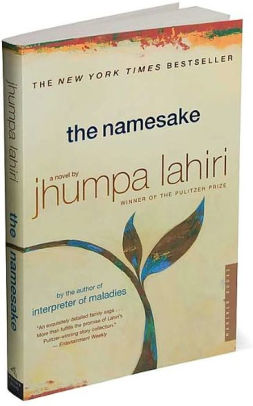 |
The Namesake portrays both the immigrant experience in America, and the complexity of family loyalties that underlies all human experience. Ashoke and Ashima Ganguli, after an arranged marriage in India, emigrate to America where Ashoke achieves his dream of an engineering degree and a tenured position in a New England college. Their son Gogol, named for the Russian writer, rejects both his unique name and his Bengali heritage.In a scene central to the novel’s theme, Ashoke gives his son a volume of Nikolai Gogol’s short stories for his fourteenth birthday, hoping to explain the book’s significance in his own life. Gogol, a thoroughly Americanized teenager, is indifferent, preoccupied with his favorite Beatles recording. Such quietly revealing moments give the narrative its emotional power. The loneliness of lives lived in exile is most poignantly revealed in the late night family telephone calls from India, always an announcement of illness or death.
Gogol earns his degree in architecture, but happiness in love eludes him. An intense love affair with Maxine draws him into a wealthy American family, revealing the extreme contrasts between American and Indian family values. Gogol’s marriage to Moushumi, who shares his Indian heritage, ends in divorce.
Jhumpa Lahiri’s conclusion achieves a fine balance. Ashima, now a widow, sells the family home and will divide her time between America and Calcutta. Gogol, at thirty-two, discovers in his father’s gift of Gogol’s short stories a temporary reconciliation with his name and the heritage he has rejected.Critics praise Lahiri’s luminous, graceful style and her keenly observed details of daily life, particularly the mythic significance of food and ethnic customs. The Namesake, her first novel, fulfills the promise of her collection of short stories,
|
All My Sons by Arthur Miller
All My Sons by Arthur Miller

All My Sons' is a play by Arthur Miller. Setting of the play is time of second world war.On the night Ann's visits Chris Keller, a storm knocks over a tree in his family's yard. This tree was planted in honor of the Keller's late son, Larry, a pilot who died in World War II. The timing seems significant to Chris's mother Kate, who still thinks of Ann as Larry's girlfriend, not Chris's.
Kate still believes that Larry is alive. She insists that Ann feels the same, but Ann makes it clear that she isn't waiting for Larry. Chris has asked Ann to visit because he intends to propose to her and needs his father's support in convincing his mother that it's a good match.
In the course of the play, it's revealed that Ann's father Steve has gone to jail for allowing cracked cylinder heads to be installed in fighter jets on the front. From jail, Steve accuses Joe of knowingly ordering him to ship the cracked cylinder heads. Joe denies it, claiming that he was home sick at the time, but Ann's brother George catches Joe in the lie.Ann reads a letter that Larry sent her while he was on the front. In it, Larry reveals that Joe knew about the cracked cylinder heads all along and that Larry intends to crash his plane because of this. Upon hearing this, Joe commits suicide to repent for his actions.
Kate still believes that Larry is alive. She insists that Ann feels the same, but Ann makes it clear that she isn't waiting for Larry. Chris has asked Ann to visit because he intends to propose to her and needs his father's support in convincing his mother that it's a good match.
In the course of the play, it's revealed that Ann's father Steve has gone to jail for allowing cracked cylinder heads to be installed in fighter jets on the front. From jail, Steve accuses Joe of knowingly ordering him to ship the cracked cylinder heads. Joe denies it, claiming that he was home sick at the time, but Ann's brother George catches Joe in the lie.Ann reads a letter that Larry sent her while he was on the front. In it, Larry reveals that Joe knew about the cracked cylinder heads all along and that Larry intends to crash his plane because of this. Upon hearing this, Joe commits suicide to repent for his actions.
Othello by Wiliam Shakespeare
Othello by William Shakespeare

Along with Hamlet, King Lear and Macbeth are one of Shakespeare's four great tragedies. Othello is unique and often described as "Tragedy of Characters". Shakespeare's tragic tale opens in Venice where the villainous Iago plots against Othello the Moor. Iago poisoned Othello's ears that Cassio has an illegitimate relationship with Desdemona.
Desdemona is completely innocent and extremely faithful to Othello Iago gives handkerchief that Desdemona dropped to Cassio then suggests that it was as soon as it was given to Cassio as a symbol of love. Mad with jealousy, Othello kills Desdemona his sad drive him to suicide Iago arrested but never reveals his true motive for manipulating Othello.Iago's dazzling display of villainy The relationship between these characters is another unusual feature of Othello. Othello and Iago bears the greater responsibility for the tragedy.More than anything else what's different from Othello from it's great tragedies peers is the role of it's villain, Iago is a character who essentially writes play's main plot. and takes a key part in it. Written in 1604, Othello is one of Shakespeare's tightly constructed tragedies.The fall of the proud, dignified man, the murder of loving and graceful woman and the unreasoning hatred of an "motiveless" villain all have evoked fear and pity in audiences throughout the centuries. If we compare Othello with hamlet then we have come across the truth Because Othello kills his wife without thinking and even if he knows that Claudius is a murderer.
Tughlaq by Girish karnad
Tughlaq by Girish karnad

Tughlaq is a 1964 Indian Kannada language play written by Girish Karnad. The thirteen-scene play is set during the reign of Muhammad bin Tughlaq. In 1970, it was enacted in English in Mumbai. 'Tughlaq' is Karnad's second play written in 1964, The play was originally written in Kannada and then translated into Kannada by Karnad himself. It is all about the life of Sultan Muhammad bin Tughlaq who has ruled in India in the 14th century. One of the critical issues that Karnad addresses in Tulghlaq is the striking gap between political aspirations and its reality. Karnad understands this about the historical conditions that surround Tulghlaq.
One of the critical issues that Karnad addresses in Tulghlaq is the striking gap between political aspirations and its reality. Karnad understands this about the historical conditions that surround Tulghlaq,
The Purpose by T.P. Kailasam

The Purpose' is two act play by Indian writer T.P. Kailasam. It tells the story of Ekalavya as in Mahabharata but here playwright portrays character of Ekalavya more powerful, noble and intelligent than Arjuna. In Mahabharata Drona asks for thumb but in this play Ekalavya willingly gives his thumb because he can't bear insult of Drona by Arjuna.
The dialogues are simple and interesting. By dialogues author creates characters. The title basis on the intentions of Arjuna and Ekalavya to learn archery. Arjuna's purpose was selfish. He wanted to learn archery for becoming best archer while Ekalavya wanted to learn archery to help other. He wanted to save fawns. So purpose becomes important while learning something. That's why Ekalavya learns more than Arjuna.
The dialogues are simple and interesting. By dialogues author creates characters. The title basis on the intentions of Arjuna and Ekalavya to learn archery. Arjuna's purpose was selfish. He wanted to learn archery for becoming best archer while Ekalavya wanted to learn archery to help other. He wanted to save fawns. So purpose becomes important while learning something. That's why Ekalavya learns more than Arjuna.
A grain of wheat by Ngugi Wa Thiongo

Wheat grain is a novel that speaks about the freedom struggle of Thabai village.
In 1963, it was held in Kenya on Uhuru. Kenya was created colony by the British government. Vaikki, the initial leader of the struggle fought against him but lost. But he had a sense of freedom in his community. And so the Mao Maa movement starts. Kihika kills a police officer, but he arrested and hanged. The fighters attacked the Mei Police and declared the British Emergency. People are harassed, women are killed and many youths including Mugo and Giaconias are arrested and sent to the detention camp.
When Gikki was arrested by his wife, Mumbi sleeps with Karanja and becomes pregnant. When the Giancons know that they leave their wife and start working in the Green Research Center Gitima, started by the British.
Mumo comes to see a rage and admits her story. Mugo also admits Qihika's betrayal. Uhuru General gives a speech on the day of the day and goes ahead with the betrayer. Mugo comes out of the crowd and others have decided to secretly punish him. In the end, the Giancons accepted a candle with her child.
Once upon a time by Gabriel Okara

This is the best poem by Gabriel Okra and I like it most. This shows the "laughter" of the modern man. In this poem a grandfather is talking to his grandson and in the past he has expressed the fall of 'nostalgia'. He tells his son that once people met each other with heart, they laughed with their eyes, and they laughed with their teeth. But the time has changed. Now people are not more interested in meeting anyone with complete heart. This is a very true poem for reality. The society and the people around us pushed us to become 'artificial' at every stage of life. They taught us to wear many masks at the same time. This is the most beautiful line,
And I have also learned
Just laugh with my teeth
And shake hands without my heart.
I have also learned to say 'goodbye'
When I mean 'good-redundancy':
Saying 'Have Fun With You'
Without pleasure; And say 'it's done
After getting bored, talk to you nice.
Just laugh with my teeth
And shake hands without my heart.
I have also learned to say 'goodbye'
When I mean 'good-redundancy':
Saying 'Have Fun With You'
Without pleasure; And say 'it's done
After getting bored, talk to you nice.
Reminds me of 'Fire & Ice' poetry by Robert Frost. Which poet said that the days of physical war have gone? People now fight "with hateful chills." People live well in your presence but inside you hate cold blood.
The last stanza is even more interesting. It represents this idea that children are the most innocent in the world. So an older man wants to be like a child. And he expresses his desire to 'unlearn' what he has learned. But it is very difficult for anyone to unlearn things and to invent new knowledge.
Finally, I want to give a new title to poetry, which is "the laugh of modern man".
Ode to Nightingale by Robert frost

Nightingale is the famous intent of young English romantic poet John Cats. Ode is a poem that talks to a person or thing or celebrates a special occasion.When kittens are sad, one nightingale watches and listens to the songs. He was in a state of inactivity and smell. Because he took the medicine a few moments ago. He says that he is not in this position because that night was happy and he was not happy but he was glad to share happiness.
The kits want the liquor draft to take him out and join him with Nightingale. She thinks that wine will put it in a state in which she will forget all the misery of life. This reflects how the kits will be sad. Next he says about the grief of life. The young die, the older suffers. Life brings sorrow and pain only.
Now the kittens say that there is no need of wine to escape from reality. His imagination can do it too. He feels this and raises the trees and can see the moon and stars, but in reality there was just a little light. He also says that although he can not see the flowers in the glade but he can guess them. White Hawthorne, eglantine, Violet, and musk-Rose, all.
In the darkness, he listens to Nightingale and feels that it will be the best time to die. Until noon in midnight, Nightingale would gladly sing the song. She admits that she is in love with simple death. Nightingale is free from human fate. They say that Nightingale is immortal. Not literally, but it means that the music of nature is immortal and that was heard by ancient emperors and farmers.
Finally the kits come back to the real world. Using imagination, he could not escape reality. It was just temporary.
Now the bird's singing increases and dies. Did the kits confuse that if a complete experience had a vision or daydream? Was not it scheduled that he sleeps or wakes up?
Here the poem ends. This poem reflects the ideas of kittens, the power of imagination of death and the reality of life.
Subscribe to:
Comments (Atom)
MOVIE REVIEW : HARRY POTTER
Harry Potter and the Philosopher's Stone "Harry Potter and the Sorcerer's Stone" is a red-blooded adventu...

-
આ જિંદગી !!! જિંદગી.....! શું છે આ " જિંદગી ".....? ક્યારેક અહેસાસ ની અનુભૂતિ, તો કયારેક આત્મ...
-
 Tughlaq by Girish karnad Tughlaq is a 1964 Indian Kannada language play written by Girish Karnad. The thirteen-scene play is set duri...
 -
 to evaluate my assignment click here http://dilipbarad.blogspot.in/2015/10/rubric-for-evaluation-of-writ...