wordsworth


 Image result for wordsworth


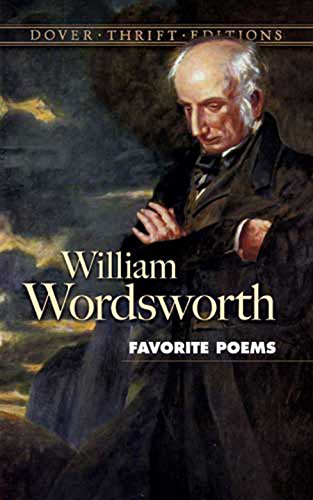
William Wordsworth was a major English romantic poet who, with Samuel Taylor Coleridge, helped launch the Romantic Age in English literature with their 1798 joint publication, Lyrical Ballads.

Wordsworth's masterpiece is generally considered to be The Prelude, an autobiographical poem of his early years which the poet revised and expanded a number of times. The work was posthumously titled and published, prior to which it was generally known as the poem "to Coleridge". Wordsworth was England's Poet Laureate from 1843 until his death in 1850.


In literature, Classicism values traditional forms and structures. According to legend, the Roman poets Virgil left orders for his masterpiece The Aeneid to be burned at his death, because a few of its lines were still metrically imperfect. This rather extreme example demonstrates the importance placed on excellence in formal execution. Such attention to detail can also be seen in the work of the Italian poet Dante Alighieri, whose Divine Comedy contains over 14,000 lines written in a strict rhyming pattern known as' terzarima'. Other characteristics of the movement include balance, order, and emotional restraint.


➤  What is the basic difference between the poetic creed of 'Classicism' and 'Romanticism'?
Romanticism and classicism they are two different ideologies or 'school of thought'. And given idea about dominance of certain things. 

Classicism:in classicism aesthetic attitude and principals manifested in the art architecture and literature if ancient Greece and Rome and characterized by emphasis on form simplicity proportion and restraint. Romanticism: Romanticism was an artistic literary musical and intellectual movement that originated in Europe towards the end of 18th century. 

Difference between classicism and romanticism is that classicism put out restrictions,whereas romanticism believes in liberty. Classicism presents urban life , whereas romanticism presents rural life. classicism believe on subjectivity and romanticism believes in objectivity. classicism is about intellectual and romanticism is about imagination .

 Why does Wordsworth say 'What' is poet? rather than Who is poet?

A poet is man speaking to men, a man, it is true, endued with more lively sensibility, more enthusiasm and tenderness,

Who has a greater knowledge of human nature, and a more comprehensive soul, than are supposed to be common among mankind. 

Wordsworth has greater knowledge of human nature through the emotions like observation, heightened. He also uses platonic, more comprehensive soul. 

➤  What is poetic diction? Which sort of poetic diction is suggested by Wordsworth in his Preface?

Poetic diction means 'Choice of Word'- unique style of authors that he or she chooses his or her own language, which is understood by rustic people; who closure to reality and more genuineness the language should be natural not ornamental. Wordsworth's argument is that he is interested in writing poems in lyrical ballads. And the language "as really used by men". Wordsworth also answers to Coleridge that he finds humble and rustic life, a men who closer to reality or more genuineness. Wordsworth preferred rustic men rather than city dwells.

➤ What is poetry?

 Wordsworth's  definition of poetry  :
    " Poetry is the spontaneous overflow of powerful feelings it takes origin from emotion recollected in tranquility. "

   Wordsworth portrays his idea about poetry in this definition that poet is the most comprehensive soul and far better human being than ordinary people. so, the poet is the teacher and through the medium of of poetry he imparts moral lessons for the betterment of human life.

➤  Discuss 'Daffodils - I wandered lonely as a cloud' with reference to Wordsworth's poetic creed.
  'Daffodils' is the best example of Wordsworth's definition of poetry “poetry is a spontaneous overflow of a powerful feeling, recollected in tranquility". We all see the beauty of nature by our different point of views  but we cannot recollect and express that delight in tranquility.  so, we can call Wordsworth as nature poet, by recalling his memory and sensibility and by observing the nature, Wordsworth wrote his poetry. 

Aristotle

Aristotle's Poetics 

Image result for Aristotle's Poetics


 Q.1-  How far do you agree with Plato’s objection to freedom of expression and artistic liberty enjoyed by creative writers? Name the texts (novels, plays, poems, movies, TV soaps etc which can be rightfully objected and banned with reference to Plato’s objections) 

(1-A).I agree Plato's objection to freedom of expression is true because some kind of serials ,advertisement and literary text is not good aspect for examples are
➨Ahaliya-indra, kunti's children and many other's things
.
➨Sony tv serial "Bharat ka veer putar 'Maharana pratap" .
In real life Maharana Pratap and Akbar never came face to face with each other. But here the two have been fighting each other ever since they were kid. Like every other serial, this serial Forget history, the serial just like any other contemporary TV show is full of saas bahu saajish and melodrama.
➨In the tragedy "Othello" by William Shakespeare During the drama the audience finds itself in concepts of love,hate,jealousy.Othello killed his wife.
➨Advertisements of "Domino's pizza" and other advertisements .97% of all food advertised to all food advertised to make children's unhealthy levels of fat, sugar,or salt.
So I agree with Plato's objection.
Q.2.  With reference to the literary texts you have studied during B.A. programme, write brief note on the texts which followed Aristotelian literary tradition (i.e. his concept of tragedy, catharsis, tragic hero with hamartia etc)
(2-A).Aristotle defines tragedy as, “the imitation of an action that is serious and also has moving magnitude, complete in itself; in appropriate and pleasurable language… in a dramatic rather than narrative form; with incidents arousing pity and fear, where with to accomplish a catharsis of emotions”, . These are unique qualities which can be in Othello. The story starting with the main character and protagonist Othello, an African general for the Venice army. Othello has just married his wife Desdemona. Throughout the play Othello is challenged by Iago who works under him. Iago provides the drama; he represents the antagonist.Nothing good becomes of this play. By the end of this tragedy, both Othello and Desdemona are dead.
Q.3.  With reference to the literary texts you have studies during B.A. programme, write brief note on the texts which did NOT follow Aristotelian literary tradition. (i.e. his concept of tragedy, catharsis, tragic hero with hamartia etc.)
(3-A.) Harry Ape as a modern tragedy does not follow the theory of Aristotle. Yank the hero has no hamartia as he is not a man of highrank . there are the action not external but internal.
Q.4.  Have you studied any tragedies during B.A. programme? Who was/were the tragic protagonist/s in those tragedies? What was their ‘hamartia’?
(4-A). Othello by william shakespeare tragedy I study in my B.A pogramme.follow necessary rules and regulations proposed bAristotle's definition of tragic hero othello follow this definition and not only othello reprsent a hero as a general of an army ,he is the main character of the play.he draws compassion and sympathy from the audience making him the tragic hero.
5. Did the ‘Plot’ of those tragedies follow necessary rules and regulations proposed by Aristotle? (Like chain of cause and effect, principle of probability and necessity, harmonious arrangement of incidents, complete, certain magnitude, unity of action etc)
(5-A)."othello" follow necessary rules and regulations proposed by Aristotle

hamlet

Hamlet


How faithful is the movie to the original play?
       
Movie is quite faithful to the play, because it has followed the text well, but it has also "a creative  touch"  by the director, and in scenes like the conversation between ghost and Hamlet, Hamlet's rude behavior  towards Ophelia, we can notice it is very well directed and performed, it can express emotions as well as by imagination while reading.


After watching the movie, have your perception about play, characters or situations changed?

At some point it has changed my perception about the play. While reading we can imagine the different kind of situations and scenes of the play, but after watching the movie we come to know about how the dialogues were delivered, and after observing  the expressions, we conclude the interpretation more effectively.  It has given a perfect support to the play to get proper meaning.

Do you feel ‘aesthetic delight’ while watching the movie? If yes, exactly when did it happen? If no, can you explain with reasons?

Yes,this is tragic play, though I felt 'aesthetic delight' while i have watched some comic scenes of Hamlet and when there is a scene of Ophelia and Hamlet when they were happy, we can also feel delight when Hamlet recalls his memories with his father. Aesthetic delight can be found in tragic scene also, when Hamlet saw the ghost of his father and had a talk with him.

Do you feel ‘catharsis’ while or after watching movie? If yes, exactly when did it happen? If no, can you explain with reasons?

Yes, I felt 'catharsis' in such scenes like:  when Hamlet come to know about his father's murder by  his uncle and mother, when Hamlet is frustrated and he behaves cruelly with Ophelia, In the scene in which Ophelia had gone mad and his brother came, when Hamlet dies.

Does screening of movie help you in better understanding of the play?

Yes it is very much useful to get the play properly and in right way. At one point it can power up our imagination to get the setting, situations and the mind set of character by his expression.  Audio visuals can effect more than 'Only reading', as we can remember easily what we have seen than what we have read.

Was there any particular scene or moment in the movie that you will cherish lifetime?

There are many scenes in the play which are very beautifully directed, but the scene in which Hamlet follows the ghost and the whole conversation is beautifully directed, there is various emotions mingled together, there is delight, terror, revenge, shock and the feeling of hatred in the eyes of Hamlet, and the expression of the ghost and his effective voice, his tone is so effective.

If you are director, what changes would you like to make in the remaking of movie on Shakespeare’s ‘Hamlet’?

I feel that there is no need any changes in movie. Because movie is wonderfully presented by Kenneth Branagh. Movie is also faithful to play so I feel that there is no need any changes.

In the beginning of the movie, camera rolls over the statue of King Hamlet out side the Elsinore castle. The movie ends with the similar sequence wherein the statue of the King Hamlet is hammered down to the dust. What sort of symbolism do you read in this?


Symbolism is one of the narrative technique. Director use very well this technique in his movie. The first and the last scene of the kings statue outside the castle symbolizes the ' circle of life'. Power never remains stagnant. It keeps on changing. Downfall is necessary to know the real value of power.

While studying the play through movie, which approach do you find more applicable to the play? Why? Give reasons with illustrations.

We can observe many approaches in one on the other way. I feel that psychological and formalist approach is more applicable. In such scenes of play Hamlet is with his mother and when he is going to take such decision towards his revenge with Claudius, many times he finds himself helpless. In formalist approach, all about trapping each other.

Which of the above mentioned approaches (in Pre-viewing task) appeals you more than other?Why? Give reasons.

In the play, formalist approach is appeals me more than any other approach. There is vast difference between "seeming" and "being" in all the major characters like Hamlet, Claudius and Gertrude. All are pretend as they are right and good but all has some kind of devilish intention. There is a question of " knowability" of characters in play.


Gulliver Travels


Gulliver's Travels :-


Gulliver's travels an adventure story. It involves several voyages of LEMUEL GULLIVER, a ship's surgeon. There are total four voyages that is a voyage to LILLIPUT, BROBDINGNAG and HOUYHNHNMS. Gulliver after each adventure is somehow able to return to his home in England, where he recovers from those unusual experiences and then sets out again on a new voyage.


In the third voyage there is an element of colonialism. In this voyage Gulliver finds a floating island that is Laputa. Gulliver meets several inhabitants including the king. All are pre-occupied with things associated with mathematics and music. The king of Laputa island is ruling over Balnibarbi, which is an island below it. How can one rule over other place which is far away, without knowing the cause and sufferings of people.


 This is what colonialism shows that is full control over another country, occupying it with settlers and exploiting it economically. In the last voyage of Houyhnhnms elements of colonialism is developed to an extent. The Houyhnhnms are ruling over Yahoos. The civilized rules over uncivilized. Houyhnhnms the horses portrays Yahoos as uncivilized. They interpreted with their own thinking without getting other voice from Yahoos. So Houyhnhnms are colonizer, they make their own rule. Anything which is evil is Yahoo for them. There is an unequal relationship between the colonial power and the colony that is Yahoos and Houyhnhnms. Houyhnhnms are powerful and they are ruling over weaker Yahoos. Yahoos are considered as bad creature who engage in violence, fights with each other, lacks moral values. But Houyhnhnms are superior in there own world, they have all good qualities and the word 'bad' is only used for Yahoos.

post truth


Post Truth

When we talk about the POST-TRUTH its hide real situation and it is not presents the reality of the society .The people also live in some kind of   assumption  that is is  truth. The truth means something exist in the society but the POST-TRUTH is retelling the truth which canbe truth or not. We see in the media tht how they hide the reality of people so people is live in some kind of ignorance but in the real life but it is not truth.


Truth is always about that exist or we can say the facts which are there. On the other hand post truth is ‘‘created truth’. the famous  phrase about truth is ‘’universal truth’’. But POST-TRUTH is an individual truth , which one believes and when that person convince others to accept the same belief by force or in a very polite way, and if people accept that as something  ‘real’ or ‘true’, it is not.
“POST- TRUTH” era is an era which changes the perception of truth by implying that “truth is not one” but it differs person to person. The  term is related with the idea of ‘many truths’ and all want their truths should be accepted by society.in the era of POST-TRUTH all answers are true because all have different opinions with their own right side.
  

Example can be the molestation of girls. There is a problem in the psyche of those males who molest girls. But some political leaders and other citizens have implied that the reason is short cloths of girls for this kind of molestation. This was repeated  by most of people in india and that’s why it was widely accepted also.
The term ‘’post truth’’ is designed to elicit a sense of moral superiority in those who still support the globalist agenda. It is consistent with the elitist character of the globalist,whose rhetorical sr ategy has been to praise its supporters as ‘enligtend’ and condemn its opponents as stupid and evil.

Youth festival


 Youth festival:-

November 4,2017


Today we went to saw our youth festival at MKBU,
The day was end with so many memorable moments. It was really very nice event organised on large scale at our university. First we all friends went to Amphi theatre where skit was going to be performed. All colleges performed very well,the best performance which i like the most is BAHUBALI BY KPES COLLEGE, it was amazing skit. It was full of current themes which our nation was facing now a days. That is price rise, sanitary, cleaning, the growing popularity of jio. As we know that , in the bahubali film, the mother of bhallal dev offering the states and power to him, but in this performance she offer 'jio' according to current situation of making India digital. And also bhallal dev jumped with happiness to this offer. The play covers the humor very well. All laugh loud and enyoyed a lot. In short time spam all things covered in this act. As this short skit also focus upon aristotle's view of unity of time, place and action. But mostly we can call it laughing comedy on current situation.

Then we went to 'sugam sangeet' where all r girls who participate. I dont know if there is any boy, there all are Saraswati sitting. All sings classical song melodiously. The performance which i like the most is of Riddhi of our department,she very sweetly sing the song of Lord krishna. I was mesmerized by her performance.
 Then afterwards we went to saw ' loknrutya'. The best event of the day. There were so many performance and the  most best Garba with dandiya performed by Sahjanand college and K.p.e.s college. We feel very delightful after watching that Loknrutya, it naturally evokes inner joy and we feel like we are also dancing on stage. Most stunning Loknrutya was performed by various colleges.
 OUR ENG DEPT ALSO PARTICIPATED IN VARIOUS COMPITITION AND WON FIRST SECOND AND THIRD PRISE IN VARIOUS
COMPITITIONS .
HERE IS MEMORY OF YOUTH FEST 2017


Pehredari piya ki


Pehredani piya ki


I am in support of this serial. I really liked the concept. It is not all about the marriage of two different age group, that is one is too young and the other is too elder. It is about making girl or a woman same powerful as man. In this serial the girl Diya married to the young prince Ratan to protect him from the other evil members of his family. His life was in danger after the death of his mother and father. This first thinking makes us moves forward than just patriarchal thinking that only man can protect.


assigmentpaperno3

 To evaluate my assignment click here

 http://dilipbarad.blogspot.in/2015/10/rubric-for-evaluation-of-written.html


Paper Name    :-  Literary Criticism
Name              :- Bambha kajal A
Roll No.           :- 20
Semester         :- 1
Year                :-  2017-2019
Submitted to   :- Dr. Dilip Barad
                            Department of English,
                            Bhavnagar University
Topic :-  Aristotle theory of Catharsis

 Image result for Aristotle theory of Catharsis

Introduction :-

 The catharsis theory originated with Aristotle and his play Poetics. Aristotle believed that when people viewed tragedy in plays, it gave them an emotional release. Any negative feelings that they may feel such as fear or anger, were purged when they view characters in tragic events. This theory has been carried over into modern day mass media. It is used to justify the increase in the amount of violence we see in the media.

The Meaning of Catharsis :-
                             
                     ‘‘First, there has been age- long controversy about Aristotle’s meaning, though it has almost always been accepted that whatever he meant was profoundly right. Many, for example, have translated. It is bad to be selfishly sentimental, timid Catharsis as ‘Purification’, ‘correction or refinement’, ‘Reinigung’ , or the like.
                             
                           There as strong evidence that catharsis means, not ‘Purification but ‘Purgation’. A medical metaphor. Yet, owing to changes in medical thought, ‘purgation’ has become radically misleading to modern minds. Inevitably we think of purgatives and complete evacuations of water products; and then outraged critics ask why our emotions should be so ill-treated.
                           “ But Catharsis means ‘purgation’, not in the modern, but in the order, wider English sense which includes the partial removal of excess ‘homours’. The theory is as old as the school of Hippocrats that on a due balance. Of these humours depend the health of body and mind alike.” – F.L.Lucas.
                                To translate Catharsis is purgation today is misleading owing to the change of meaning which the word has undergone. The theory of humours is outdated in the medical science. ‘purgation’ has assumed different meaning. It is no longer what Aristotle has in mind. Therefore, it would be more appropriate to translate Catharsis as ‘moderating’ or ‘tempering’ of the passions. But such translation, as F.L.Lucas suggests, ‘keep the sense, but loss the metaphor.’  Anyway, when it is not possible to keep up both, the meaning and the metaphor it is better to maintain the meaning and sacrifice the metaphor in translating Catharsis as ‘moderating’ or ‘temptaing’.
                                 
                                The passions to be moderated are these of pity and fear. The pity and fear to be moderated are, again of specific kind. There can never be an excess in the pity that results into a useful action. But there can be too much of pity as an intense and helpless feeling, and there can be also too much of self-pity which is not a praise-worthy virtue. The Catharsis or moderation of such pity ought to be achieved in the theatre or otherwise when possible, for such moderation keeps the mind in a healthy state of balance.
                                And by allowing free vent to this in the theatre, men are to lesson, in facing life thereafter, their own fear of the general dread of destiny.   F.L Lucas
                              
                              Catharsis established tragedy as a drama of balance. Aristotle writes that the function of tragedy is to arouse the emotions of pity and fear, and to affect the Catharsis of these emotions. Aristotle has used the term Catharsis only once, but no phrase has been handled so frequently by critics, and poets. Aristotle has not explained what exactly he meant by the word, nor do we get any help from the Poetics. For this reason, help and guidance has to be taken from his other works. Further, Catharsis has three meaning. It means ‘purgation’, ‘purification’, and ‘clarification’, and each critic has used the word in one or the other senses.                            
      
     Catharsis has been taken as a medical metaphor, ‘purgation’, denoting a pathological effect on the soul similar to the effect of medicine on the body. This view is borne out by a passage in the Politics where Aristotle refers to religious frenzy being cured by certain tunes which excite religious frenzy.
In Tragedy: 

“…pity and fear, artificially stirred the latent pity and fear which we bring with us from real life.” 

          
                              In the Neo-Classical era, Catharsis was taken to be an allopathic treatment with the unlike curing unlike. The arousing of pity and fear was supposed to bring about the purgation or ‘evacuation’ of other emotions, like anger, pride etc. 
                       As Thomas Taylor holds:

“We learn from the terrible fates of evil men to avoid the vices they manifest.” 

F. L. Lucas rejects the idea that Catharsis is a medical metaphor, and says that:

“The theatre is not a hospital.”


                            During the Renaissance, another set of critics suggested that Tragedy helped to harden or ‘temper’ the emotions. Spectators are hardened to the pitiable and fearful events of life by witnessing them in tragedies.

                          
                             According to ‘the purification’ theory, Catharsis implies that our emotions are purified of excess and defect, are reduced to intermediate state, trained and directed towards the right objects at the right time. The spectator learns the proper use of pity, fear and similar emotions by witnessing tragedy. 
  Butcher writes:

“The tragic Catharsis involves not only the idea of emotional relief, but the further idea of purifying the emotions so relieved.” 

                             The basic defect of ‘purgation’ theory and ‘purification’ theory is that they are too much occupied with the psychology of the audience. Aristotle was writing a treatise not on psychology but on the art of poetry. He relates ‘Catharsis’ not to the emotions of the spectators but to the incidents which form the plot of the tragedy. And the result is the “clarification” theory.
                             o
                               Thus according to this interpretation, ‘Catharsis’ means clarification of the essential and universal significance of the incidents depicted, leading to an enhanced understanding of the universal law which governs human life and destiny, and such an understating leads to pleasure of tragedy. In this view, Catharsis is neither a medical, nor a religious or moral term, but an intellectual term. 

                               The clarification theory has many merits. Firstly, it is a technique of the tragedy and not to the psychology of the audience. Secondly, the theory is based on what Aristotle says in the Poetics, and needs no help and support of what Aristotle has said in Politics and Ethics. Thirdly, it relates Catharsis both to the theory of imitation and to the discussion of probability and necessity. Fourthly, the theory is perfectly in accord with current aesthetic theories.

                               According to Aristotle the basic tragic emotions are pity and fear are painful. If tragedy is to give pleasure, the pity and fear must somehow be eliminated. Fear is aroused when we see someone suffering and think that similar fate might befall us. Pity is a feeling of pain caused by the sight of underserved suffering of others. The spectator sees that it is the tragic error or Hamartia of the hero which results in suffering and so he learns something about the universal relation between character and destiny. 
 To conclude,
                     Aristotle's conception of Catharsis is mainly intellectual. It is neither didactic nor theoretical, though it may have a residual theological element. Aristotle's Catharsis is not a moral doctrine requiring the tragic poet to show that bad men come to bad ends, nor a kind of theological relief arising from discovery that God’s laws operate invisibly to make all things work out for the best.

Coleridege

Coleridge:-


S T Coleridge gives his views to differentiate poem from prose in chapter 14 of biographia literaria.
he says that the difference between poem and prose must consist in the different object proposed. Some poems are made in metre or rhyme, but this is done only for remembering it. Coleridge says that the  poem is not only differentiate by using metre or rhyme with prose, but it would gives pleasure. The immediate object of poem is to give pleasure not the truth. On the other hand the immediate object of prose is to give the truth. He again differentiate poem from those prose whose objective is also to please the readers by saying that a poem must be a legitimate poem, means each and every single word of poem should explain and support the entire part of poem. There should be harmonious whole in poem.
In legitimate poem " the reader should be carried forward, not merely or chiefly by the mechanical impulse of curiosity or by the pleasurable activity of mind exited by the abstractions of the journey itself".
  

Helpe then, O holy Virgin chiefe of nine,                Thy weaker Novice to performe thy will;
  Lay forth out of thine everlasting scryne
  The antique rolles, which there lye hidden still,
  Of Faerie knights[*] and fairest Tanaquill
  Whom that most noble Briton Prince[*] so long                  
  Sought through the world, and suffered so much ill,
  That I must rue his undeserved wrong:
O helpe thou my weake wit, and sharpen my dull tong.
n the above canto Queen Elizabeth ask for help to the holly knight. She wants to sent him into the forest where there is a devil. She wants that knight to fight with the devil and killed him. In this lines of the poem there is not only the curiosity of the reader and restless desire to arrive at the final solution that what should this holy knight do, whether he get success in killing the demon in the forest or not, but also the there arise the pleasurable activity of the mind excited by the abstractions of the journey itself.

Poem and Poetry-

Coleridge not only distinguished prose with poems but poetry with poems also. He says that the poetry is a wider than poem, it brings the whole soul of the man. He differentiate poetry with poetic genius. He further explain that poetry of the highest kind may exist without metre and even without the contradistinguishing object of a poem.
"poetry for coleridge is an activity of the poets mind and a poem is merely one of its expression"
the best example which supports this definition of poetry is of William butler yeats's sailing to Byzantium'

An aged man is but a paltry thing,
A tattered coat upon a stick, unless
Soul clap its hands and sing, and louder sing
For every tatter in its mortal dress,
Nor is there singing school but studying
Monuments of its own magnificence;
And therefore I have sailed the seas and come
To the holy city of Byzantium.

In the above stanza of the poetry the poet describes the present situation of his country. He says that there is corruption everywhere. Thus he wants to sail to the holy city Byzantium. In this poetry the poet covers much wider topics and it is successively presents the activity of the poets mind.

Dryden


Dryden's Thinking Activity

1) Do you find any difference between Aristotle's definition of Tragedy and Dryden's definition of Play?

Let's first see both the definition,
Aristotle's definition

"Tragedy, then is an art of imitation of an certain that is serious, complete and of a certain magnitude; in the language embellished with each kind of artistic ornament. The several kinds being found in separate parts of the play; in the form of action not of narrative; through pity and fear effecting the proper purgation catharsis of these and no emotions."

Dryden's definition

"A play ought to be a just and lively image of human nature, representing its passion and humors and the changes of fortune to which it is subjected, for the delight and instruction of mankind"

We can see diffrence from the very starting of the definition, Aristotle starts with word "Tragedy" while wordsworth starts with "The play" which shows that Aristotle only give definition of Tragedies while wordsworth speaks about The Play in general. In Aristotle's definition there is words used like "pity", "fear", "catharsis" this all words shows inaway a delight through sad emotions while wordsworth's definition talk about "Delight" which includes all kind of delight. These are some visible difference in both definition.

2) If you are supposed to give your personal predilection, would you be on the side of the Ancient or the Modern? Please give reasons.

I would rather prefer to go with the moderns, yes ancients are important but it doesn't mean that we stuck to them if we will stuck at one point we will die we have to move on and this is the reason I will go with moderns because they always add something new to the work of ancients and yes moderns are sit on the back of ancients and they can see far because inaway they are at height.

plato's objection

Image result for plato's,objection


 Plato,s objection


I am agree with plato's objection to freedom of expression artistic liberty enjoyed by creative writers. As we know that some tv soaps are totally weird and idiotic, by seeing that type of tv soaps we must think that plato's objection is really true. Some types of immoral acts should be totally banned. Plato in his book  The republic says that poets misguide people and they provoke evil ideas in people' s mind. Hence they should be banished from the ideal state. I want to give a recent example from the daily soap' Udaan'. This serial misguide people to do the cruel and illegal things. In this serial the main villain kamal narayan is always involve in conspiracy. He constantly conspired against that small girl chakor. By seeing this act of conspiracy people get ideas about it. This villain always tried to dominate the entire village and all the villagers were his slaves. There is proper name given to these slaves " Bandhua majdur". So people get affected and they also tried to trapped someone and to humiliate. It should be banned  as if i think from plato's point of view.

                          During my B.A programme, I have studied the great play Oedipus Rex by Sophocles. This play followed aristotle literary tradition. In this tragic play plot is the soul of tragedy. All the events are logically built to form a perfect plot. From birth to death all events are tied together. The decision of Oedipus to find the truth behind the plight of his countrymen leads to his own tragic fall. This eagerness and anxiety of finding every cause makes Oedipus weak. This is the small weakness in a strong character which is called hamartia as described by aristotle. This play also followed the three unities given by aristotle. The unity of time is followed properly as there is no vast gap between two events. Each n every event comes out instantly.

     Oedipus himself reveal all the events logically. As he solve the riddle of Spinx, sent Creon to the oracle of Delphi to find the truth. After returning from oracle of Delphi Creon reveal that the murderer of  the king Laios responsible for the plight of countrymen. Then Oedipus goes on finding the murderer. At the end after revealation of every  thing Oedipus himself  found as a murderer who kills his father and married to his mother. There is also unity of place, as most of the events takes place only at one place that is Thebes. At last unity of action also followed by the character Oedipus, as the action done by Oedipus is consistent and convincing.


I also studied Shakespeare's play As you like it during my B.A programme. As we know that Shakespeare didn't follow the three unities. So Shakespeare breaks Aristotelian literary tradition. In the play As you like it,there is no unity of place. Some parts of the play enacted i  the forest of Arden,some at far away from forest at palace. There is also no unity of time. Rosalind and Orlando met at palace. Then after a long break they unite at the forest of Arden. But there Rosalind disguised herself as Ganymede. At the end she reveal her identity. So much act playec by her was in her disguised form.  There is no hamartia, no tragic hero in the play, the whole play should be classified as pastoral comedy. There are so many couples in the play. And all get married at the end with the help of God of marriage.

Dr.faustus

Q.1  The play directed by matthew dunster for globe theater ends with this scene (see the image of lucifer.) what does it signify ?

   Ans.                    In the last scene of play Dr. Faustus caught alone in his study waiting for the
devils to come and take his soul. we can see the wide wings of lucifer it signify power of evil and in the and evil wins it shows his victory.

Q.2  Is God present in the play ? if Yes, where and how? if No, why ?

Ans.                     Yes, God has present in the play as good angels and friend and as old man. God tries to help faustus one or the other way so faustus think himself powerful. we are find in this play god is present in the mind of Dr. faustus. and also shows in this play when we doing something wrong it's against to god.

Q.3  What reading and interpretation can be given to this image (see the image of  daedalus and lcarus) with reference to central theme of the play. Dr. Faustus?

Ans.                         This picture of daedalus and lcurus is Greek mythology. Daedalus was father of Lcarus. lcarus ignores his father's warning and he was destroyed and fall down so he was responsible for his own fall. similarly in this play Dr. Faustus ignored warning of god and his own inner voice he ignored everything for become more powerful so he was responsible to end of his life.

Robinson crusoe by Denial Defoe

Robinson Crusoe is the novel by Denial Defoe and its first published in 25 April 1719. It is a novel about Robinson Crusoe. It is adventure story.


1)write about colonial discourse in Robinson Crusoe:
Ans -   Colonialism in the novel:
• Giving the Name:
         In this novel Crusoe saved one native 's life and by saving his life he giving that man a name ' Friday.'
    " I let him know his name should be Friday which was the day I saved his life."
       He also calling Friday as " My man Friday".
• Relationship:
 
     In the novel the relationship of Friday and Crusoe is as a master- slave relationship. Crusoe tells Friday to call him master. So thus Crusoe thinks himself as a master and Crusoe as a slave.
• Language:
       Friday Jones his own native language but later on Crusoe teaches him his own language that is "English".
• Culture:
 
      Crusoe teaches his culture to Friday. He tells Friday to wearing cloths. He forcing him to wear clothes. Friday was not comfortable in clothes but he have to wear clothes because of Crusoe.
• Religion :
     
      As a part to colonizing Crusoe also talked about his religion and God to Friday. Through this he wants to tell him superiority of his God.
 
2) How colonialism works in our life (in contemporary time/ of our surrounding Give examples )?
Ans - In contemporary time colonialism working in many ways like we are free from British ruling but they still ruled in our minds.
• we learn English language and we give more importance to their language and culture.
• we celebrating 31 December.
• we are attracted by their white skin and we want to as fair as they are and so for that we using many beauty products.
• we also celebrate birthday and anniversaries.
• celebration of Mother's day ,Father's day,children's day etc.
3)  Do you think that movie is different than original novel?
Ans - yes, movie is different than original novel.
• In the movie only describing one voyage but in the novel describing two or three voyages.
• In the novel Crusoe forced Friday to wear clothes but in the movie Crusoe never told Friday to wear clothes.
• In the novel Friday accepting Crusoe as a 'Master' and he followed everything which was told by Crusoe. In the movie Friday never accepting Crusoe as a master. He told him that ' I am not slave'.
• In the novel Friday accepting Crusoe 's God and his religion but in the movie Friday never accepting his God and he also says that :
      " I don't like your God and I don't like you. "
    We can see the rebelling nature of Friday.
• In the novel Friday needs Crusoe but in movie when Friday leaves him at that time he feels alone and he apologized for his behavior and thus Crusoe needs Friday.
• In the novel Crusoe considered as a brave man and Friday considered as fearful man but in the movie it is opposite Friday is brave man and Crusoe is feels fearful at many times.
• In the novel the relationship between Crusoe and Friday is as master and slave relationship. In the movie it is totally different from it. In the movie they both are good friends.
4) Anti colonial elements in the film:
Ans - In the film Friday has rebellion nature. He never accept Crusoe's religion and his God. He has courage to denied everything.
• In the film Friday never frightened for the Gun. He wants to know more about that Gun.
• In the film the relationship between Crusoe and Friday is as friends not as a master and slave relationship.
• In the film Friday never accepting Crusoe's culture, religion and his clothes. He never changing himself. Crusoe never force for anything.

Kajalbambha assigment2

to evaluate my assignment click here
http://dilipbarad.blogspot.in/2015/10/rubric-for-evaluation-of-written.html


MOVIE REVIEW : HARRY POTTER

Harry Potter and the Philosopher's Stone  "Harry Potter and the Sorcerer's Stone" is a red-blooded adventu...